


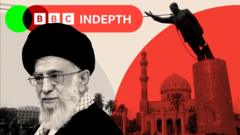
The declaration of “Mission Accomplished” from the deck of the USS Abraham Lincoln in 2003, intended to signal the swift success of major combat operations in Iraq, has since become a potent symbol of premature pronouncements in foreign policy. Today, as international attention frequently turns to escalating tensions involving Iran, the specter of that historical moment looms large, prompting a critical examination of current dynamics through the lens of past conflicts. While the echoes of past entanglements are undeniable, the geopolitical landscape surrounding Iran presents profoundly distinct challenges and considerations.
One significant parallel lies in the intense rhetoric and strategic posturing that often precedes or accompanies military interventions. Similar to the build-up to the 2003 Iraq war, discussions surrounding Iran frequently involve accusations of regional destabilization, the pursuit of unconventional weapons, and threats to international security. The perceived imperative to contain or confront perceived threats, often framed in terms of safeguarding global stability or national interests, resonates across both eras. Furthermore, the complex web of regional alliances and proxy conflicts that characterized the Middle East then, and even more so now, adds layers of intricacy to any potential resolution or escalation. The potential for miscalculation, given the high stakes and diverse actors, remains a constant and unsettling echo from previous engagements.
However, the differences between the 2003 Iraq situation and the current state of affairs regarding Iran are equally stark and crucial. Unlike Iraq’s relatively isolated status, Iran possesses a more deeply integrated, albeit often adversarial, role within regional power dynamics, bolstered by a sophisticated network of proxies and a formidable conventional military. The nature of the perceived threat also diverges significantly; while Iraq was targeted over alleged weapons of mass destruction that ultimately proved absent, concerns about Iran largely center on its nuclear program, its ballistic missile capabilities, and its ideological posture, all of which are managed through a complex interplay of international diplomacy, sanctions, and deterrence. The global consensus, or lack thereof, on how to approach Iran’s challenges is also distinct, with the multilateral Joint Comprehensive Plan of Action (JCPOA) having provided a framework for engagement, even as it has faced political upheaval. The profound weariness among international publics regarding protracted military conflicts, deeply influenced by the outcomes of past interventions, adds another layer of complexity to any consideration of future actions. These distinctions underscore that while history offers valuable lessons, each geopolitical crisis presents a unique set of variables demanding tailored, nuanced responses beyond simple historical replication.