


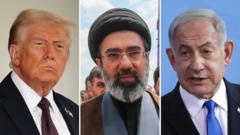
The desire to de-escalate tensions surrounding Iran and conclude any potential conflict swiftly is widely shared across the globe, yet the precise conditions for such an outcome diverge significantly among key actors. While a general consensus favors an immediate cessation of hostilities, the terms under which this peace would be established reveal a complex tapestry of geopolitical interests, security concerns, and ideological objectives.
For Iran itself, a primary objective in ending any conflict would likely revolve around securing its sovereignty, preserving its internal political structure, and ensuring the lifting of international sanctions. Tehran would seek assurances against external intervention, a recognition of its regional influence, and the protection of its strategic assets, including its nuclear program, albeit potentially within agreed-upon frameworks. Economic stability and the ability to trade freely would also be paramount.
Regional powers, particularly Gulf Arab states and Israel, hold distinct priorities. Their primary concerns center on curbing Iran’s perceived expansionist ambitions, its support for proxy groups, and the development of its ballistic missile program. These nations would advocate for terms that diminish Iran’s capacity to destabilize the region, guarantee their own security, and ensure the free flow of commerce through vital waterways. The long-term objective for some may involve a fundamental shift in Iran’s regional foreign policy.
Global powers, including the United States, European Union members, China, and Russia, approach the issue with varied agendas. The United States and its allies typically prioritize non-proliferation, ensuring Iran does not acquire nuclear weapons, and promoting regional stability that aligns with their strategic interests. They often emphasize human rights concerns and the need for Iran to adhere to international norms. European nations often lean towards diplomatic solutions, seeking to preserve the nuclear deal and prevent a wider conflict that could have severe economic and humanitarian repercussions. China and Russia, while also desiring stability, tend to emphasize international law and non-interference, often viewing the situation through the lens of multilateralism and their own geopolitical balance of power interests, particularly regarding energy security and trade routes.
The international community, represented by bodies such as the United Nations, generally advocates for peaceful resolution, adherence to international law, and humanitarian protection. Their focus is on de-escalation, protecting civilians, and facilitating aid, often pushing for negotiated settlements that address the root causes of conflict while respecting national sovereignty.
Ultimately, the challenge lies in reconciling these disparate demands into a framework that provides lasting peace, ensuring that the end of conflict is not merely a pause but a sustainable resolution addressing the fundamental drivers of contention. Each party views the “end” of conflict not just as a cessation of fighting, but as the establishment of a post-conflict order that aligns with its strategic vision and national interests.