


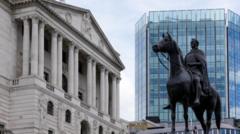
The current economic environment presents a notable paradox as interest rates have recently descended to their lowest point since March 2023. This occurs even as inflation persists at levels well above official targets, raising questions among financial analysts regarding the rationale for such monetary policy adjustments.
Economic commentators, including Faisal Islam, are scrutinizing the implications of reducing borrowing costs when the primary goal of price stability has not yet been achieved. Central banks typically aim for a specific inflation rate, and a sustained deviation above this threshold often signals a need for tighter monetary policy, not looser. The apparent contradiction between falling interest rates and enduring high inflation therefore poses a significant point of discussion.
Arguments for cutting rates despite elevated inflation often center on supporting broader economic activity, stimulating investment, and easing the financial burden on consumers and businesses. Policymakers might anticipate that current inflationary pressures are transient, perhaps driven by factors expected to dissipate, or they may prioritize preventing an economic downturn. However, critics caution that easing monetary policy too soon could rekindle inflationary pressures, making it harder to bring prices back to target and potentially undermining public confidence in the central bank’s commitment to stable prices. This ongoing debate reflects the complex balancing act central banks face as they navigate conflicting economic signals and strive to fulfill their dual mandates of fostering economic growth and maintaining price stability.