


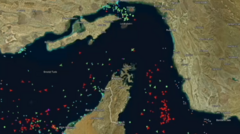
Recent visual analysis, employing timelapse photography of marine traffic, has brought to light a discernible shift in shipping patterns within the Strait of Hormuz. The compiled footage indicates a reduction in the overall volume of vessels traversing this critical maritime passage.
This observation, derived from the extended visual record, provides clear evidence of a modified operational tempo in one of the world’s most significant waterways. The Strait of Hormuz is globally recognized for its crucial role in international trade, particularly for energy shipments. A documented decrease in marine traffic, as presented by the timelapse, serves as an indicator for maritime observers and stakeholders, prompting a closer look at the factors influencing activity in this strategically vital corridor. Such changes can often reflect broader trends in global commerce, supply chain adjustments, or regional operational considerations impacting vessel movements through key transit zones.