


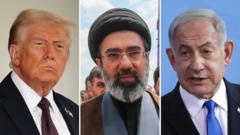
The desire for a swift conclusion to the current conflict involving Iran is widespread, though the specific terms under which it should end are a subject of intense debate and diverse interests. While the majority of global actors and populations advocate for an immediate cessation of hostilities, the path forward is complicated by competing objectives held by various nations and factions.
For some, the priority is de-escalation and the restoration of regional stability, aiming to prevent further loss of life and economic disruption. This perspective often favors diplomatic solutions and a return to pre-conflict security arrangements. They seek an end to the violence that allows for unimpeded trade routes and a reduction in the broader geopolitical tensions that the conflict has exacerbated.
Conversely, certain regional powers and their allies may view the ongoing conflict through a different lens. Their objectives might include weakening adversaries, securing strategic advantages, or asserting influence in the region. For these entities, a prolonged conflict, or one that concludes on terms favorable to their interests, could be seen as a necessary, albeit costly, step towards achieving long-term security or dominance.
Internal political considerations within Iran also play a significant role. The government’s stance on ending the war is inevitably shaped by domestic pressures, including public opinion, the economic impact of sanctions and conflict, and the influence of hardline or reformist factions. Their definition of a “successful” end to the war will likely prioritize national sovereignty, security, and the preservation of their political system.
International bodies and non-governmental organizations are primarily focused on humanitarian concerns. Their objective is to halt the suffering of civilians, ensure the delivery of aid, and facilitate long-term peacebuilding efforts. For them, the terms of the war’s end are inextricably linked to accountability, reconstruction, and the protection of human rights.
The economic implications of the conflict further complicate any universally agreed-upon resolution. Energy markets, global supply chains, and investor confidence are all sensitive to the ongoing instability. Nations reliant on oil exports may see potential benefits from continued high prices, while importing nations bear the brunt of increased costs. This economic divergence creates distinct interests in how and when the conflict is resolved.
Ultimately, the question of “who wants what” from the Iran war reveals a complex web of competing interests, ranging from immediate humanitarian relief to long-term strategic repositioning. The challenge lies in finding common ground or imposing a resolution that, while potentially satisfying some parties more than others, can lead to a sustainable and peaceful future for the region.