


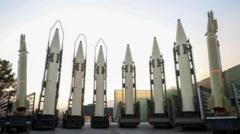
The question of whether Iranian missile technology poses a direct threat to major European cities such as London and Paris is a complex one, frequently debated among defense analysts and intelligence agencies. While Iran has undeniably advanced its ballistic missile program over recent decades, developing a variety of short- and medium-range systems, the capability to accurately and effectively strike targets thousands of kilometers away remains a subject of ongoing assessment.
Certain military experts and strategic observers suggest that, based on reported advancements and projected ranges, some of Iran’s more sophisticated missile systems could theoretically possess the reach to impact areas as distant as London. This assessment often considers the technical specifications of missiles that have been unveiled or are believed to be in development. Extending this theoretical range to include Paris would logically follow, given its relative proximity within Europe.
However, a crucial aspect of this discussion involves the highly robust and multi-layered missile defense architecture maintained by NATO member states and their European allies. These sophisticated systems are designed to detect, track, and intercept incoming ballistic threats at various stages of their flight path. Any missile launched towards European capitals would face an extensive network of radars, ground-based interceptors, and potentially naval assets, all working in concert to neutralize the threat long before it could reach its intended target.
Consequently, even if a theoretical capability for such a long-range strike exists, the practical likelihood of an Iranian missile successfully penetrating these advanced defenses and hitting a target like London or Paris is considered extremely low by the vast majority of defense analysts. The consensus emphasizes that while Iran’s missile program warrants continuous monitoring, the immediate risk of such an attack proving successful remains minimal due to the comprehensive protective measures in place.