


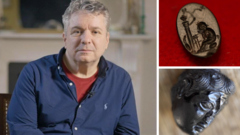
Dr. Ittai Gradel, a distinguished scholar, rose to global prominence after his diligent efforts brought to light a shocking series of thefts from the hallowed collections of the British Museum. His meticulous work unveiled a scandal of immense proportions, shaking the foundations of one of the world’s leading cultural institutions and triggering widespread concern.
Operating largely independently, Gradel meticulously identified numerous artefacts, many of them small, valuable pieces like gemstones, ancient jewellery, and fragments of Roman and Greek pottery, appearing for sale on various online platforms. His profound expertise and painstaking cross-referencing against limited public records and his personal knowledge allowed him to conclusively link these items back to the British Museum’s vast, often uncatalogued, holdings. This dedicated detective work proved crucial where the museum’s own internal systems had failed.
The scale of the illicit activity he uncovered was staggering, with estimates quickly reaching into the hundreds of missing objects, acquired over a significant period. This revelation prompted urgent internal and external investigations and cast a long shadow over the museum’s security protocols, inventory management systems, and overall accountability, which had evidently failed to detect such a significant and prolonged breach.
Initially, the museum’s response was cautious, but the undeniable evidence presented by Gradel, coupled with mounting public pressure and intense media scrutiny, eventually forced a full acknowledgement of the serious security lapses. A staff member was subsequently dismissed, and a police investigation was launched, underscoring the gravity of the situation and the institutional failures that had permitted it.
Gradel’s work not only triggered an internal reckoning within the British Museum but also sparked a wider international debate on the provenance, security, and accessibility of cultural heritage in major institutions globally. The scandal garnered global headlines, severely impacting the museum’s reputation and eroding trust among scholars, donors, and the public alike, prompting calls for greater transparency and improved safeguarding measures.
Tragically, Dr. Gradel passed away before he could witness the full resolution of the crisis he so bravely exposed. His untimely death meant he did not live to see the complete recovery of all the stolen items, nor the full extent of the accountability and systemic changes that were still unfolding as a direct result of his courageous and unwavering efforts. The pursuit of justice for the stolen heritage continues in his absence.
His legacy, however, endures as a powerful testament to the impact of independent scholarship, moral conviction, and unwavering dedication to cultural preservation. Efforts continue to trace and repatriate the missing artefacts, and the British Museum has committed to a comprehensive overhaul of its cataloguing and security procedures, forever bearing the indelible imprint of Dr. Gradel’s singular contribution to protecting the world’s shared cultural heritage.