


One year has passed since the devastating Air India crash, and while the world mourned those lost aboard the flight, a quiet trauma continues to affect individuals who were on the ground. These are the forgotten victims, whose lives were irrevocably altered by the catastrophe that unfolded before their eyes or at their very doorstep. Their experiences paint a poignant picture of collateral damage, demonstrating how far-reaching the impact of such an event can be.
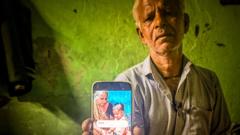
Among them is a grandfather, whose routine evening was shattered by the unimaginable. He recalls the terrifying roar and subsequent explosion that rocked his neighborhood, mere moments before debris began raining down. His primary instinct was to protect his family, a primal fear that has lingered long after the immediate danger passed. For him, the sky, once a source of simple observation, is now a reminder of sudden destruction, prompting an involuntary flinch whenever an aircraft passes overhead. The innocence of watching clouds drift by has been replaced by a deep-seated apprehension.
Another individual identifies as a ground survivor. She was in the direct vicinity, experiencing the sheer force of the impact and the subsequent chaos. While physically she escaped with minor injuries, the psychological scars are profound. The memory of the sound, the heat, and the immediate aftermath of twisted metal and smoke are vivid and persistent. Every loud noise, every unexpected shadow, triggers a surge of adrenaline, pulling her back to that horrific moment. Her story is one of enduring resilience, but also of a world that feels permanently less safe.
Then there is the witness, someone who observed the entire tragedy unfold from a nearby vantage point. This individual carries the burden of what was seen – the sudden descent, the fiery impact, and the immediate aftermath that no one is ever prepared to witness. The images are etched into memory, replaying at unexpected times. The witness struggles with feelings of helplessness and a profound sense of sorrow for all involved, both on the plane and those affected on the ground. Their perspective on life has been profoundly reshaped, leading to a reevaluation of vulnerability and fate.
These personal accounts collectively underscore a grim truth: the full scope of a disaster often extends far beyond the immediate casualty count. For these individuals, the passage of a year has not erased the trauma. Instead, it has settled into a new normal, where the sky, once an expansive emblem of freedom and distant horizons, now carries a shadow of past terror. Their shared sentiment speaks to a fundamental shift in perception, a collective glance away from the heavens that once held no such dread.