


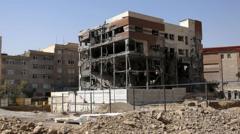
Renewed hostilities this week have once again brought to the forefront the pressing question of an endgame for the long-standing tensions between the United States and Iran. With both nations entrenched in their respective positions, analysts are actively debating what pathways, if any, could lead to a lasting resolution or even a stable de-escalation. The immediate aftermath of recent strikes prompts a deeper examination into whether either Washington or Tehran possesses a clear exit strategy from this complex geopolitical standoff.
One prevailing viewpoint suggests that the very nature of the conflict, characterized by deeply ingrained mistrust and conflicting strategic objectives, makes any straightforward exit extremely difficult. For this perspective, neither side appears willing to make the significant concessions necessary for a comprehensive agreement. The US prioritizes containing Iran’s nuclear ambitions and curtailing its regional influence, while Iran seeks to assert its sovereignty, resist external pressure, and secure its regional standing. This fundamental divergence leads to a cycle of action and reaction, where tactical de-escalation may occur after flare-ups, but the underlying tensions remain. Resolution, in this view, is less about a definitive end and more about prolonged, managed competition, occasionally punctuated by spikes in aggression, without either party achieving a decisive victory or suffering a complete defeat.
A second perspective highlights the continued, albeit challenging, viability of a diplomatic pathway. Proponents of this view argue that despite the current hostile climate, diplomacy remains the most logical and least costly avenue for long-term resolution. They suggest that a return to multilateral negotiations, potentially broadening the scope beyond just nuclear issues to encompass regional security concerns, could offer a credible route forward. Success would hinge on a willingness from both sides to engage in genuine confidence-building measures and to explore frameworks for mutual coexistence, possibly facilitated by international mediators. This viewpoint emphasizes that the costs of perpetual confrontation, both economic and human, are too high, ultimately compelling both parties to seek a structured dialogue, even if a revised agreement might look different from previous iterations.
A third analysis focuses on the need for a more fundamental strategic reassessment or a shift in broader regional dynamics as a prerequisite for any lasting peace. This perspective posits that the US-Iran conflict is deeply intertwined with the wider Middle Eastern security landscape. An end to the conflict might therefore require not just bilateral agreements but a comprehensive regional security framework that addresses the concerns of all key actors. Some also suggest that significant internal political changes or a re-prioritization of national interests within either Washington or Tehran could be the catalyst needed to break the current stalemate. This view emphasizes that external or internal pressures that force a re-evaluation of long-held strategies could unlock entirely new possibilities for de-escalation and ultimately, a more stable, albeit challenging, regional order.