


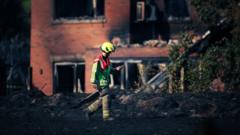
The devastating wildfires that swept through the Midlands in August 2026 left a stark reminder of nature’s raw power and humanity’s vulnerability, as 38 homes were reduced to ashes. This catastrophic event, which forced thousands to evacuate and caused widespread ecological disruption, now serves as a critical case study for communities globally grappling with increasingly frequent and intense blazes. The destruction provides invaluable insights into the complex interplay of environmental factors and human habitation in an era of climatic shifts.
Investigators and local authorities are meticulously examining the myriad factors that converged to create such a destructive scenario. While the immediate trigger for the fire remains a point of investigation, experts consistently point to a confluence of persistent drought conditions, record-breaking summer temperatures, and the expanding wildland-urban interface as primary drivers. The sheer speed and intensity with which the fire spread, fueled by arid vegetation and unpredictable wind patterns, overwhelmed initial containment efforts, underscoring the escalating challenges faced by emergency services in modern wildfire events.
The extensive damage in the Midlands underscores several crucial lessons for future preparedness and mitigation. Firstly, it emphasizes the urgent need for enhanced proactive land management strategies, including carefully planned controlled burns, strategic fuel breaks, and the creation of defensible spaces around residential and commercial properties. Secondly, the incident highlights the critical importance of robust community preparedness, encompassing well-rehearsed evacuation plans, advanced early warning systems, and comprehensive public education on fire-resistant building materials and landscaping choices. Furthermore, the 2026 fires serve as a poignant signal regarding the broader implications of climate change, demanding greater investment in scientific research, long-term mitigation efforts, and adaptive strategies to protect vulnerable regions from escalating environmental threats.
Rebuilding efforts in the affected Midlands communities will undoubtedly incorporate these hard-won learnings, focusing on creating more resilient infrastructure and landscapes less susceptible to future conflagrations. The tragedy offers a powerful, albeit painful, blueprint for how other regions can fortify themselves against similar threats, transforming a moment of immense loss into a catalyst for proactive change and long-term safety. The collective experience of August 2026 stands as a clear and urgent warning, urging vigilance and decisive action in an era defined by evolving environmental challenges.