


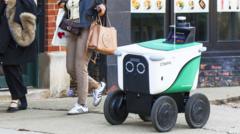
Delivery robots are increasingly becoming a common sight on American streets, but their proliferation is not without controversy. A growing number of cities are enacting bans on these autonomous vehicles, and protest groups are emerging to voice their opposition.
The core of the backlash stems from various concerns. Some residents express frustration over the robots obstructing sidewalks, creating hazards for pedestrians, particularly those with disabilities or pushing strollers. Others point to potential job displacement for human delivery workers as a significant worry.
Cities that have implemented bans or restrictions often cite a need to maintain public order and accessibility on their streets. These measures are intended to address issues ranging from traffic flow disruptions to the sheer physical presence of the robots in pedestrian-heavy areas.
Protest groups, on the other hand, amplify these concerns and advocate for community-centered solutions. Their efforts often focus on highlighting the potential negative impacts on local communities and calling for more stringent regulations or outright bans.
The debate surrounding delivery robots is a complex one, balancing technological innovation with the needs and concerns of urban communities. As these autonomous systems continue to evolve and expand, the dialogue around their integration into public spaces is likely to intensify.