


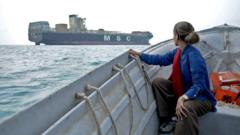
A recent journalistic endeavor saw the British Broadcasting Corporation gain unprecedented access to Bandar Abbas, a pivotal city on Iran’s side of the Strait of Hormuz. This marked a significant milestone as the first instance of a UK broadcaster being permitted to report from this strategically vital Iranian coastline. The visit offered a rare glimpse into a region frequently at the heart of international maritime and geopolitical tensions.
During their time along the Strait of Hormuz, the BBC team observed firsthand the complex reality of the area. Among the sights were various seized vessels, stark reminders of past incidents and the ongoing assertions of control within these critical shipping lanes. These ships serve as tangible evidence of the high stakes involved in safeguarding passage through one of the world’s most important maritime chokepoints.
Contrasting with the visible signs of geopolitical friction, the report also highlighted the enduring presence of local life, epitomized by the everyday activities of shark fishermen. Their continued work amidst such a sensitive environment underscores the blend of daily existence with global strategic importance that defines the Strait of Hormuz. This juxtaposition paints a picture of a region where ordinary livelihoods intersect with international security concerns.
The overall atmosphere encountered by the journalists was described as an “uneasy calm.” While overt conflict has subsided from previous peak tensions, an underlying sense of watchfulness and precariousness prevails. This uneasy quiet reflects a delicate balance, where the absence of immediate confrontation does not entirely dispel the awareness of potential future flashpoints. The report effectively captured the duality of a region that is both a bustling hub for local communities and a focal point for global attention and strategic maneuvering.