


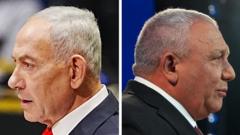
The recent general election in Israel, while serving as a testament to the nation’s democratic processes, has regrettably resulted in a profound political impasse. Voters participated actively, yet the outcome has left the country without a clear parliamentary majority, creating significant uncertainty regarding the formation of a new government.
This unprecedented deadlock signifies a deeply fractured political landscape. No single party or discernible bloc managed to secure a decisive mandate, leading to complex and likely protracted coalition negotiations. The immediate consequence is a period of heightened governmental instability and an inability to address pressing national challenges effectively.
The persistent failure to establish a functional ruling coalition is a powerful indicator of the deep societal divisions within Israel. These cleavages, spanning ideological, religious, and socio-economic lines, continue to exert a strong influence on the country’s political direction. The inability of various factions to bridge their differences and forge a broad consensus underscores the formidable challenges inherent in uniting such a diverse populace, leaving the nation grappling with its internal divisions and an uncertain political future.