


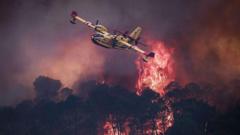
Europe is currently contending with a relentless wave of wildfires, stretching emergency services and devastating vast landscapes across the continent. These infernos, fueled by unprecedented heatwaves and prolonged drought conditions, present a critical challenge to environmental stability and public safety.
A particularly aggressive blaze in southwestern France, near the city of Bordeaux, has rapidly consumed more than 162 square miles (420 square kilometers) in less than four days, forcing thousands to evacuate and overwhelming local firefighting capabilities. Simultaneously, Spain’s Madrid region is experiencing its most severe wildfire season on record, with numerous outbreaks posing a significant threat to communities and natural habitats. The intensity and rapid spread of these fires highlight the extreme weather patterns gripping the region.
Beyond these epicenters, nations like Portugal, Greece, and Italy are also battling numerous wildfires, exacerbated by arid conditions and high winds. Even traditionally temperate areas, including parts of the United Kingdom, have witnessed an increased number of wildfires, underscoring the widespread impact of climate change across the continent. These incidents are not isolated but part of a larger trend of intensifying extreme weather events.
Tackling these devastating blazes involves a multi-faceted approach. Emergency services are deploying extensive ground crews, advanced fire trucks, and aerial support from water-bombing planes and helicopters, often aided by international cooperation and resources. Efforts extend beyond immediate suppression to include preventative measures such as controlled burns, improved forest management, and public awareness campaigns to reduce human-caused ignitions. Long-term strategies focus on climate change mitigation, building more resilient landscapes, and enhancing early detection systems to minimize future impacts.