


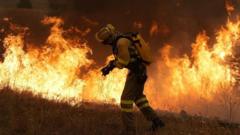
As many parts of Europe contend with an unprecedented wave of wildfires, Australia stands as a critical example of advanced disaster preparedness. For a continent routinely ravaged by intense bushfires, its strategies have evolved to integrate cutting-edge technological advancements with deeply rooted Indigenous ecological wisdom, offering a compelling blueprint for wildfire management globally.
Australia’s long and often devastating experience with bushfires has fostered a unique dual approach. On one hand, sophisticated modern technology plays a crucial role in prevention, detection, and response. Satellite imagery and drone technology provide real-time mapping of fire fronts, identify fuel loads, and monitor changes in vegetation, allowing for precise risk assessment and strategic deployment of resources. Advanced meteorological modeling predicts fire behavior, while artificial intelligence analyzes vast datasets to forecast high-risk areas and inform preventative measures. Early warning systems and robust communication networks are continuously enhanced to protect communities.
Complementing these high-tech solutions is the invaluable legacy of Indigenous land management. For tens of thousands of years, Aboriginal and Torres Strait Islander peoples have practiced ‘cultural burning’ or ‘cool burning,’ a systematic approach to landscape management that significantly reduces fuel loads through small, controlled fires. These low-intensity burns create a mosaic of burnt and unburnt areas, effectively breaking up continuous fuel sources and preventing larger, more destructive infernos. This traditional knowledge also considers specific seasons, wind patterns, and the ecological needs of particular plant and animal species, promoting biodiversity and healthier ecosystems.
The synergy between these two distinct yet complementary methods is where Australia’s approach truly excels. Modern science is increasingly recognizing the profound effectiveness of cultural burning, and contemporary fire services are actively collaborating with Indigenous elders and rangers to integrate these practices. Technology can now help identify optimal areas for traditional burns, monitor their impact, and ensure safety, while Indigenous knowledge guides the timing, frequency, and specific techniques of these preventative fires. This combined strategy not only mitigates the risk of catastrophic wildfires but also fosters ecological resilience and community preparedness. By uniting ancient wisdom with contemporary innovation, Australia offers vital lessons for nations grappling with the escalating challenge of a hotter, drier world.