


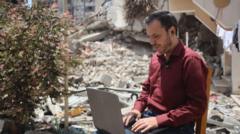
Amid the persistent economic challenges and stalled broader recovery efforts in the Gaza Strip, a notable shift is emerging as thousands of young residents are increasingly turning their focus to the burgeoning digital economy. This movement offers a compelling glimpse into a potential future path for the territory, providing a stark contrast to the difficulties faced by traditional sectors.
Young people in Gaza, often facing limited opportunities within conventional industries constrained by blockades and conflict, are actively pursuing careers in fields such as software development, graphic design, remote IT support, and digital marketing. These roles allow them to bypass many of the geographical and infrastructural barriers that hinder physical businesses, connecting them directly to a global marketplace. This pursuit represents a significant adaptation, as individuals leverage readily available internet access and their intellectual capital to forge livelihoods that are less dependent on local physical infrastructure or cross-border movement.
The growing participation in the digital economy not only offers a lifeline for many seeking employment but also fosters the development of valuable skills that are highly sought after internationally. By engaging in remote work for companies and clients worldwide, these tech-savvy individuals are not only generating income but also building expertise and resilience within their communities. This burgeoning tech workforce, despite the surrounding economic stagnation, suggests a resourceful and forward-looking approach to economic development, hinting at how innovation and adaptability could shape Gaza’s prospects going forward.