


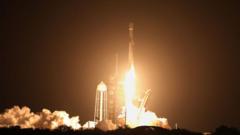
A discarded second stage of a SpaceX Falcon 9 rocket is on an unavoidable trajectory toward the Moon, slated for impact in early March. This unplanned event stems from a 2015 mission to launch the Deep Space Climate Observatory (DSCOVR) satellite, with the rocket body having insufficient energy to escape the Earth-Moon system after its primary task was completed.
The four-metric-ton booster is expected to collide near the Hertzsprung crater on the lunar far side. While the prospect of a human-made object striking our celestial neighbor might seem alarming, the Moon is a heavily scarred body, having absorbed countless natural impacts over billions of years. This particular impact is relatively minor in the grand scheme of lunar geology.
Despite its accidental nature, the collision presents a rare and valuable opportunity for scientific observation. Unlike random meteoroid strikes, astronomers know the precise mass, composition, and velocity of this particular projectile. Observatories on Earth and spacecraft orbiting the Moon, such as NASA’s Lunar Reconnaissance Orbiter (LRO), are expected to monitor the event.
Scientists anticipate studying the new crater that will form, which is predicted to be tens of meters wide. Analyzing the ejecta plume created by the impact could provide unprecedented insights into the Moon’s subsurface material, offering clues about its geological structure and composition in that specific region. Such data is crucial for understanding the Moon’s formation and evolution. The event is being treated as an unplanned, yet highly beneficial, scientific experiment, offering a unique chance to glean data that would otherwise be difficult or impossible to obtain through planned missions.