


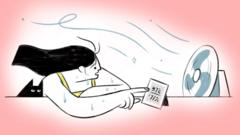
Electric fans are a common household item, particularly during warmer months. While they don’t cool the air like air conditioning, they can create a significant cooling sensation by moving air across the skin, which aids in evaporation. This process can make you feel several degrees cooler.
Many people have questions about the most effective ways to use their fans. Contrary to popular belief, pointing a fan directly at your face might not always be the most efficient method for cooling an entire room, though it offers direct personal relief. The primary mechanism of a fan is to circulate air.
One popular suggestion is to place a bowl of ice or a frozen water bottle in front of the fan. As the ice melts or the frozen bottle warms, the fan can blow cooler air around the room. This method can indeed lower the temperature of the air passing through it, providing a temporary localized cooling effect.
Another consideration is ventilation. Opening windows, especially during cooler parts of the day or when there’s a breeze, can help to exchange warm indoor air with cooler outdoor air. However, if the outside temperature is hotter than inside, opening windows can exacerbate the heat. In such scenarios, it’s often better to keep windows closed and rely on fan circulation or other cooling methods.
To maximize a fan’s effectiveness, strategic placement is key. Placing a fan near a window can help draw cooler air in (if outside is cooler) or push warmer air out. Positioning it to create a cross-breeze across a room can also improve overall air circulation. For personal cooling, directing the airflow towards yourself is effective. If you’re looking to cool a space, aiming the fan to create a circular airflow pattern within the room can be more beneficial. Some experts suggest positioning a fan to draw air from a cooler part of the house towards a warmer part.
Consider the type of fan. Tower fans and oscillating fans are designed to distribute air more broadly than a standard desk fan. Ceiling fans, when set to rotate counter-clockwise in the summer, can push air downwards, creating a cooling downdraft.
Ultimately, while electric fans don’t reduce the ambient temperature like air conditioning, their effectiveness is amplified by understanding how they work and employing smart usage strategies. Combining fan use with other cooling techniques, such as minimizing heat-generating activities indoors and using blinds to block sunlight, can further enhance comfort.