


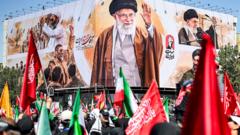
Despite a history of strong rhetoric and confrontational posturing, former President Donald Trump ultimately faced a diplomatic imperative regarding Iran, with negotiations presenting the most viable, if complex, path forward. This assessment, highlighted by BBC International Editor Jeremy Bowen, underscores the persistent reality that dialogue, rather than escalation, remained the strategic cornerstone. The process of engaging Tehran in meaningful discussions has proven inherently fragile, frequently threatened by external pressures and internal mistrust. Recent military actions undertaken by the United States have only served to further underscore the profound difficulties in achieving any lasting accord. These actions, while intended to project strength or deter specific behaviors, invariably inject additional layers of complexity into an already delicate diplomatic landscape. Reaching a comprehensive agreement necessitates navigating a volatile environment, where every move on the geopolitical chessboard carries the potential to derail progress. Bowen’s analysis points to an inescapable conclusion: for all the public bluster, the practical options for resolving the standoff with Iran consistently funnel back to the arduous, yet indispensable, work of negotiation.
Bowen: For all his bluster, Trump has no better option than talks with Iran


- Advertisment -