


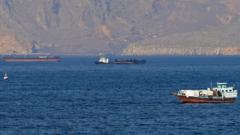
The statement by former President Donald Trump concerning a United States “blockade” of the Strait of Hormuz, when examined for its practical implications, refers not to a traditional military blockade but to a multifaceted campaign of economic pressure and strategic deterrence. A formal military blockade, under international law, is an act of war involving the physical prevention of access to or from a coastline or port, usually requiring a declaration and carrying severe international consequences.
In reality, the US has not implemented a conventional military blockade against Iranian ports in the Strait of Hormuz. Instead, the strategy employed against Iran, particularly during the Trump administration, has been characterized as a “maximum pressure campaign.” This comprehensive approach primarily leverages extensive economic sanctions designed to drastically curtail Iran’s ability to export oil and participate in international financial transactions. These sanctions specifically target critical sectors of the Iranian economy, including its vital oil industry, shipping networks, and banking institutions, with the goal of severely limiting the revenue Tehran can generate.
The “how” this pressure impacts Iranian ports and maritime trade stems directly from these severe economic measures. By imposing secondary sanctions, the US penalizes any global entities, including shipping companies, insurers, and oil buyers, that engage in business with sanctioned Iranian sectors. This policy creates a substantial disincentive for international commerce to interact with Iran, effectively isolating its economy. While Iranian ports remain physically accessible, the commercial viability and operational ease of utilizing them for oil exports, and increasingly for other forms of trade, are significantly diminished due to the pervasive risk of facing US penalties. This economic strangulation, rather than physical naval interdiction, is the primary mechanism by which Iran’s maritime trade through the strategically vital Strait of Hormuz is constrained.
Furthermore, the United States maintains a substantial naval presence throughout the Persian Gulf region, including within the Strait of Hormuz. The publicly stated objectives of these deployments are to safeguard freedom of navigation for international shipping, deter potential Iranian aggression, and contribute to regional stability. This naval presence serves as a strong signal of commitment to enforcing the US sanctions regime and responding to any perceived threats to maritime security in this critical waterway, rather than to physically block Iranian vessels from their own ports in a declared blockade.
The Strait of Hormuz itself represents a globally significant choke point, through which a substantial percentage of the world’s seaborne oil transits daily. Any actions that influence or control activity in this strait carry immense global economic and geopolitical ramifications. The US rationale for its maximum pressure campaign against Iran is centered on compelling Tehran to cease its nuclear enrichment activities, end its support for various regional proxy groups, and curb its ballistic missile development program. Therefore, while not a conventional military blockade, the extensive network of economic sanctions, combined with a robust regional military presence, functions to isolate Iran economically and severely restrict its access to global markets via its maritime routes through the Strait of Hormuz.